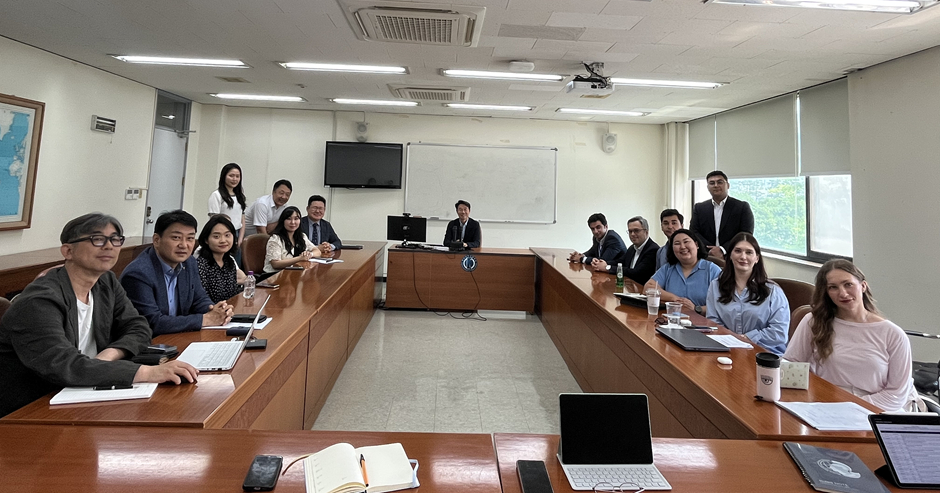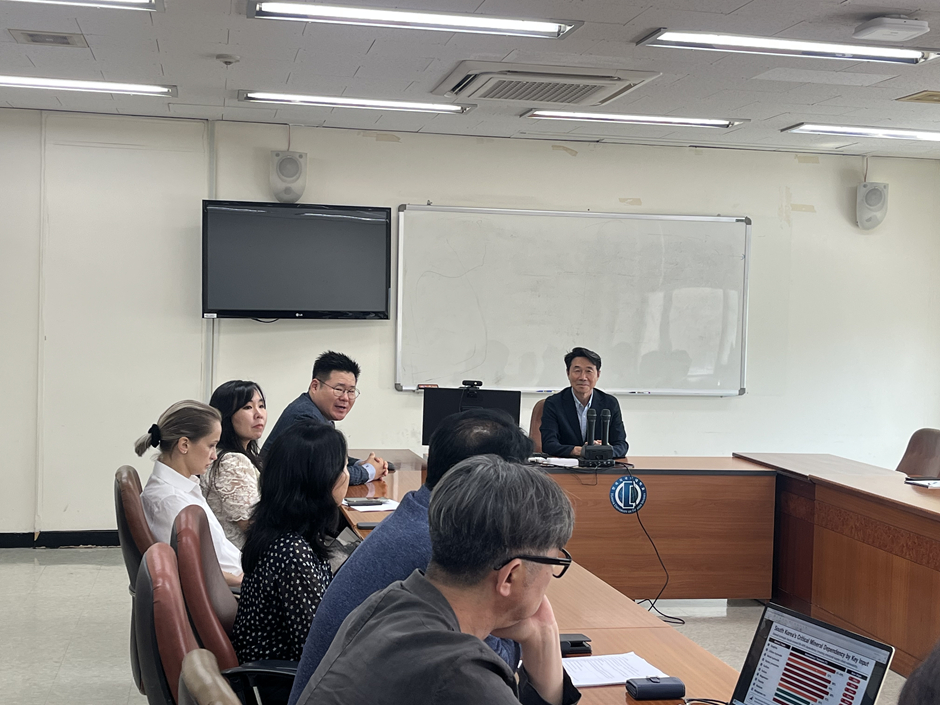
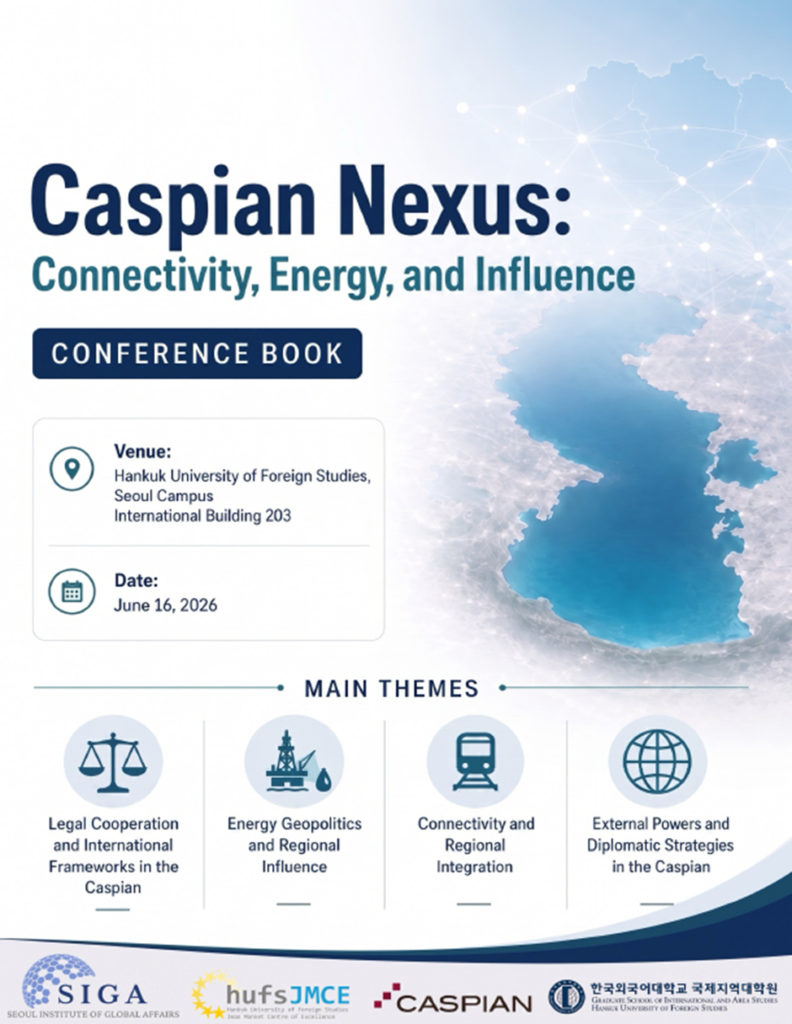
The Jean Monnet Centre of Excellence (JMCE) at Hankuk University of Foreign Studies (HUFS) co-hosted the international conference “Caspian Nexus: Connectivity, Energy, and Influence” on June 16 at the HUFS Seoul Campus, together with the Graduate School of International and Area Studies (Dean: Prof. Chanwahn Kim) and the Seoul Institute of Global Affairs (SIGA).
The conference was organized to provide a comprehensive examination of major contemporary issues surrounding the Caspian region, including energy security, transport and logistics connectivity, critical mineral supply chains, and water security. It also served as a platform for exploring opportunities to strengthen cooperation between the Republic of Korea and the Caspian littoral states.
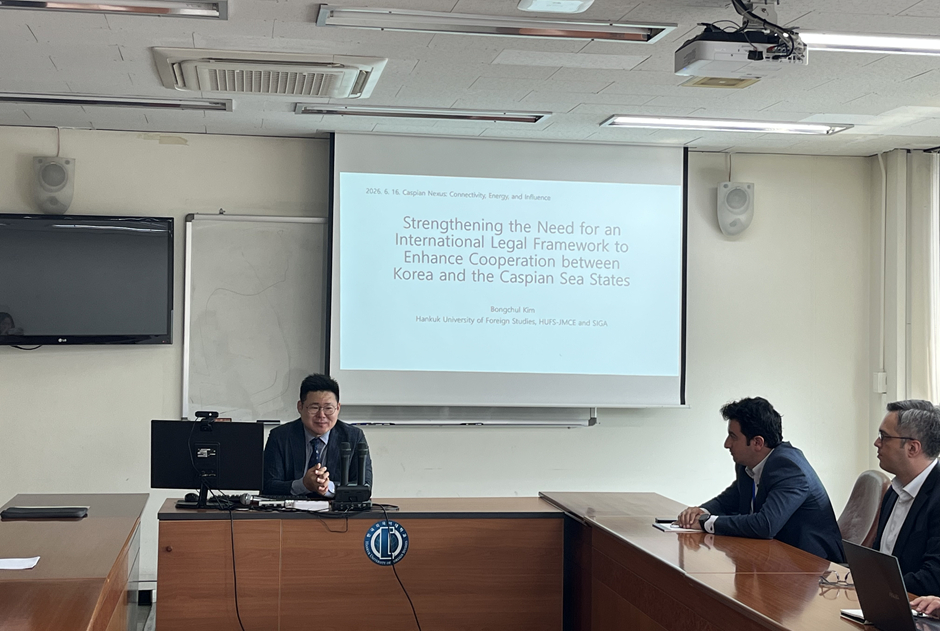
In the opening session, Prof. Bongchul Kim, Head of the HUFS Jean Monnet Centre of Excellence, delivered a presentation entitled “Strengthening the Need for an International Legal Framework to Enhance Cooperation between Korea and the Caspian Sea States.” He emphasized that, amid intensifying geopolitical competition and the restructuring of global supply chains, a stable and predictable international legal framework is essential for expanding cooperation between Korea and Caspian countries such as Kazakhstan, Azerbaijan, and Turkmenistan.
Prof. Kim further highlighted the importance of various institutional mechanisms—including bilateral investment treaties, tax agreements, and intergovernmental cooperation frameworks—in fostering long-term partnerships and reducing uncertainty in international cooperation. He also underscored the need to broaden the scope of cooperation beyond traditional sectors such as energy and infrastructure to emerging fields including digital transformation, smart infrastructure, critical minerals, and clean energy.
Subsequent sessions featured wide-ranging discussions on critical mineral supply chain strategies in Central Asia and the Caspian region, the development potential of the Middle Corridor centered on Azerbaijan, and water security challenges arising from climate change. Speakers noted that the Caspian region is emerging not only as a source of energy resources but also as a strategic hub for Eurasian logistics networks and critical mineral supply chains, making it increasingly significant from the perspectives of global supply chain resilience and economic security.
The conference brought together experts from diverse fields, including international law, economic cooperation, transportation and logistics, energy, and environmental policy, to examine future development prospects and international cooperation strategies for the Caspian region. Participants highlighted the potential for Korea to strengthen its energy security, diversify critical mineral supply chains, and expand strategic connectivity with Eurasia through closer cooperation with Caspian states.