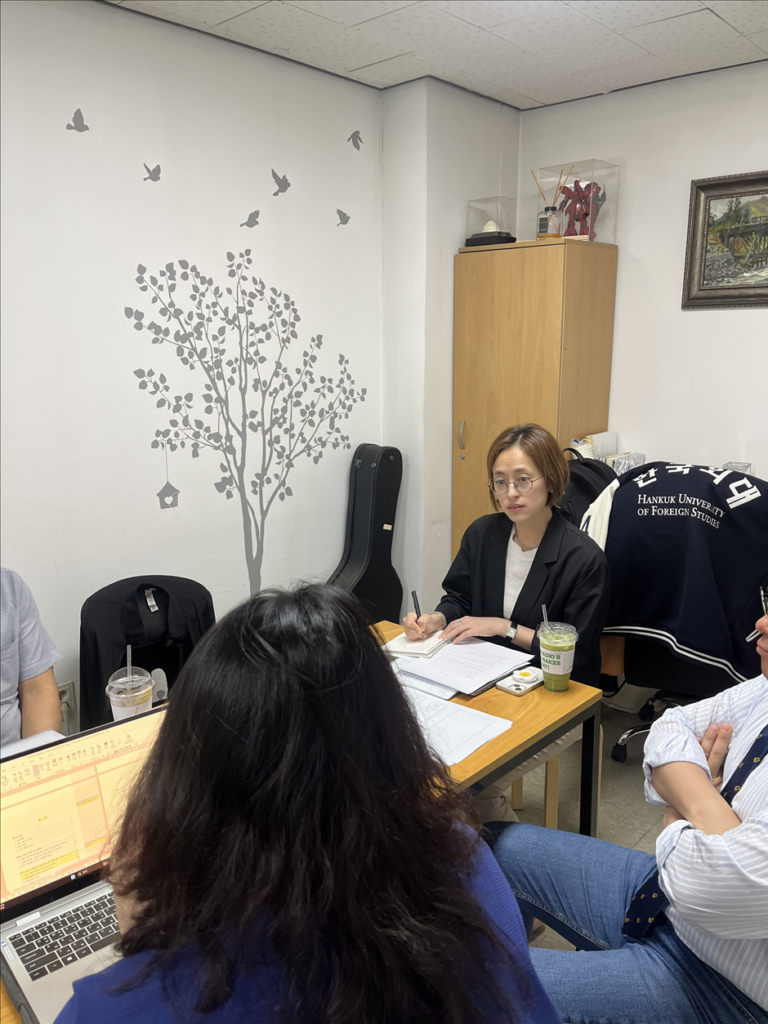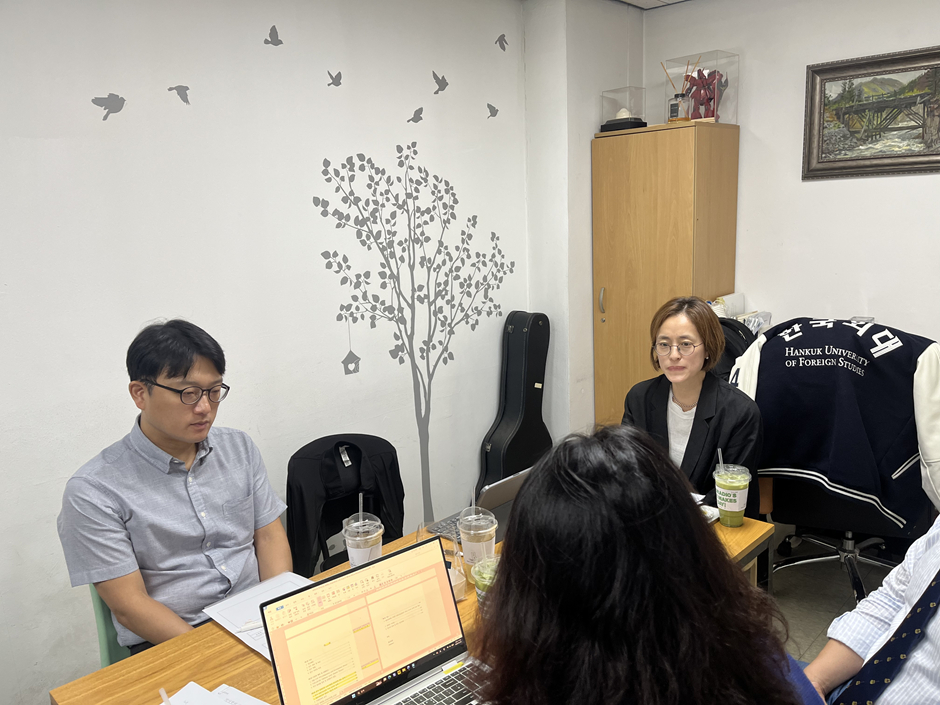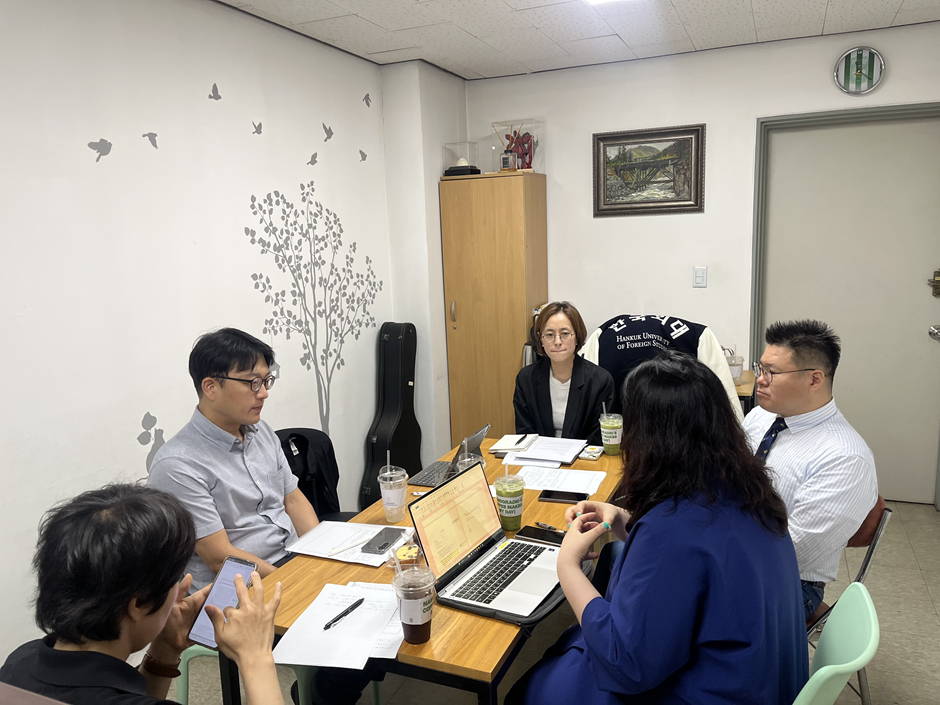
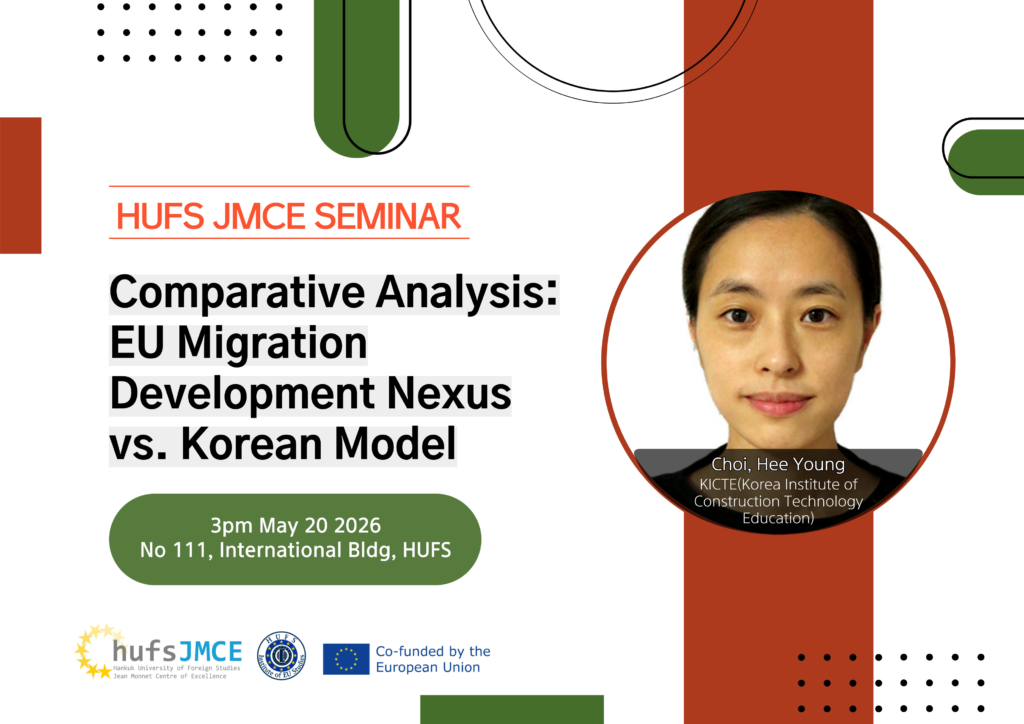
The HUFS Jean Monnet Centre of Excellence successfully hosted an academic seminar examining the paradigm of global migration policy and exploring the future of Korea’s migration model.
Held at 3:00 p.m. on May 20 in Room 111 of the International Building at Hankuk University of Foreign Studies, the seminar was organized as part of the Centre’s academic program. Ms. Heeyoung Choi, Lecturer at the Korea Institute of Construction Technology Education, was invited as the keynote speaker and delivered a presentation titled “Comparative Analysis: EU Migration Development Nexus vs. Korean Model.”
The seminar was designed to provide an in-depth analysis of the European Union’s Migration–Development Nexus framework, which has been developed through decades of experience in migration governance, while offering a comparative perspective on Korea’s migration model at a time when the country is facing rapid demographic change and increasing demand for new policy alternatives.
During her presentation, Lecturer Heeyoung Choi introduced a range of policy mechanisms through which the European Union has sought to channel migrants’ skills and human capital into the economic development of their countries of origin. She also examined the current status and future direction of a Korean Migration–Development Model, emphasizing how Korea, which has emerged as a major destination country for migrants in Asia, can build a sustainable multicultural society. Her presentation received a positive response from faculty members and students in attendance.
Professor Bongchul Kim, Director of the HUFS Jean Monnet Centre of Excellence, remarked, “At a time when Korea is rapidly entering an era of global multiculturalism, this seminar provided a timely and academically valuable opportunity to compare the European Union’s accumulated experience with Korea’s unique circumstances.”
He added, “The HUFS Jean Monnet Centre of Excellence will continue to serve as a global academic platform connecting Europe and Korea by promoting in-depth research and educational activities that address major international policy trends and emerging global issues.”