Prime Minister Tusk’s visit to Korea after 27 years highlights the significance of choosing Korea as his first non-European destinationBeyond KRW 30 trillion in defense exports, the summit reaffirmed a key partnership in strategic sectors such as secondary batteries and electric vehicles within the EUDirector Bongchul Kim: “Korea–Poland relations are entering a future-oriented phase of strategic advancement that goes beyond trade”
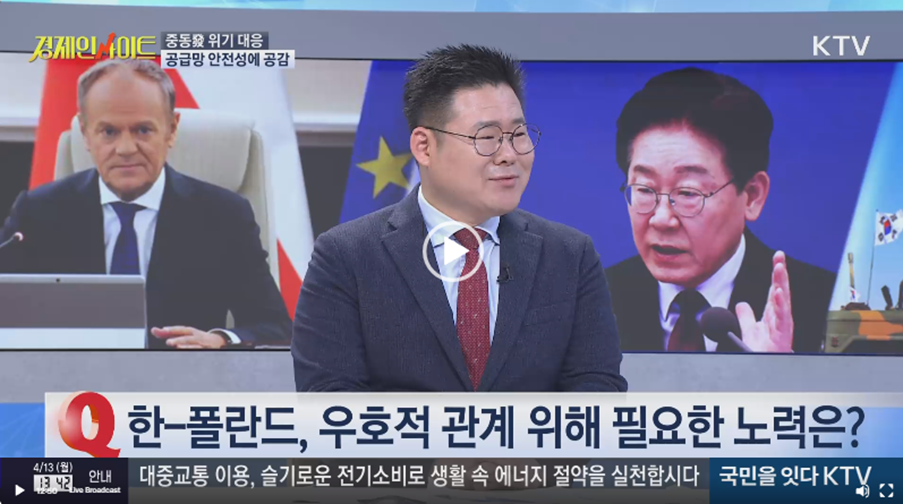
Director Bongchul Kim appeared on KTV National Broadcasting’s live program Economic Insight on April 13, where he analyzed the outcomes of the summit between President Lee Jae-myung and Polish Prime Minister Donald Tusk held on the same day and presented a vision for the future of economic cooperation between the two countries.
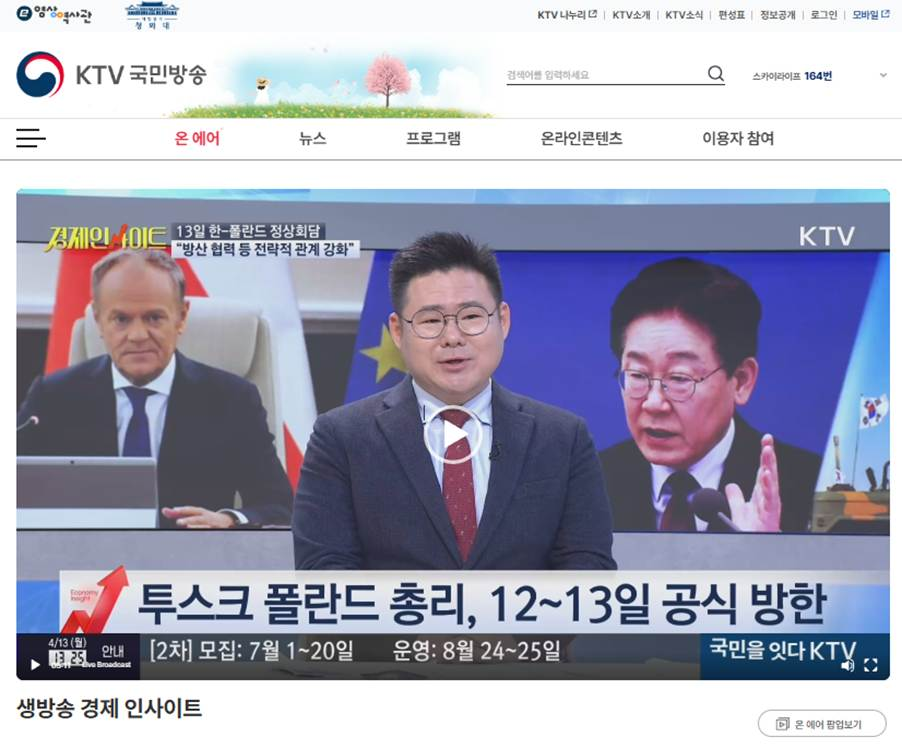
■ A Visit to Korea After 27 Years: “Poland’s Strategic Choice Is the Republic of Korea”
Commenting on Prime Minister Tusk’s visit, Director Kim stated, “This marks the first visit to Korea by a Polish leader in 27 years, and the fact that Korea was chosen as Prime Minister Tusk’s first non-European destination since taking office carries considerable significance.”
He particularly emphasized that, amid rapidly changing international circumstances including conflicts in the Middle East, Poland—a key member of NATO—has recognized Korea as a top partner in both security and economic cooperation.
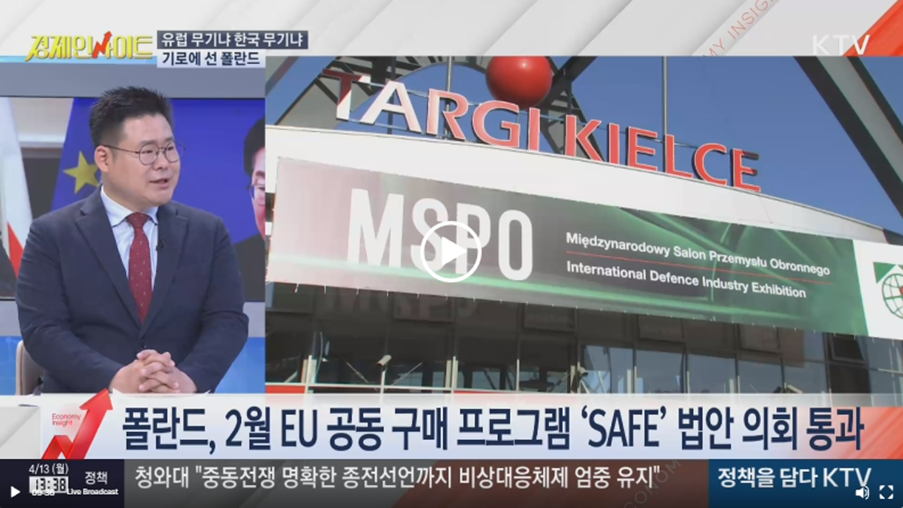
■ K-Defense Industry: Becoming a Standard Beyond KRW 30 Trillion of Trust
Regarding defense cooperation, Director Kim remarked, “Poland is Korea’s largest customer and partner in the defense sector, having already agreed to procure more than KRW 30 trillion worth of Korean-made defense equipment.”
He noted that Korean defense systems such as the K2 main battle tank and the K9 self-propelled howitzer have received high praise in Poland for their performance and reliability. He further analyzed that “through this summit, K-defense has evolved beyond a simple export item and has become an opportunity to elevate the standard of bilateral security cooperation.”
■ A Key Trading Partner within the EU: The Strength of ‘Made in Korea’
Director Kim also highlighted the deep-rooted history of economic cooperation between the two countries.
“Since the 1990s, major Korean corporations such as Samsung Electronics, SK, and LG Electronics have established operations in Poland and have become an important pillar of the local economy,” he explained.
He added that approximately 400 Korean companies currently use Poland as a strategic base for entering the European market. In particular, he stressed that Korea has established itself as Poland’s largest investor and a key trading partner within the EU in future industries such as electric vehicle batteries and automotive components.
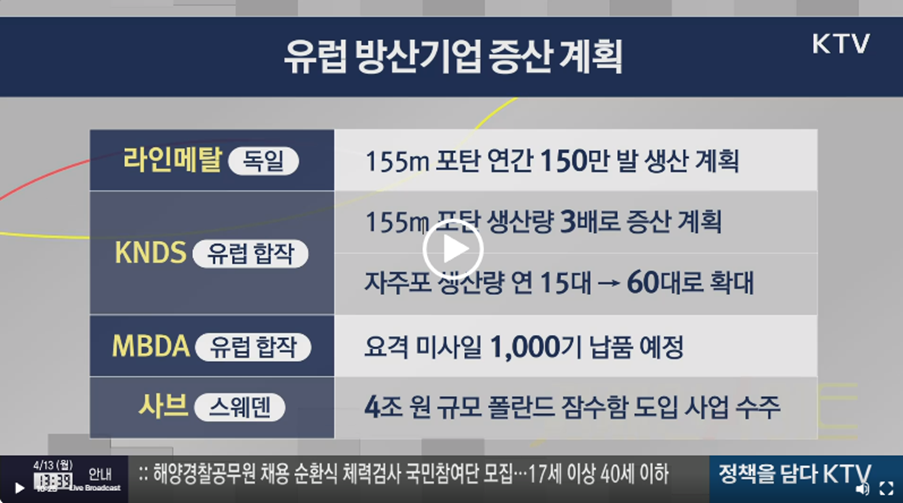
■ Korea’s Strategic Value amid the Rising Wave of ‘Buy Europe’
Director Kim referred to the recent spread of the ‘Buy Europe’ policy trend across Europe and suggested that, paradoxically, this situation could create opportunities for Korea.
“Although Europe is strengthening the protection of its domestic industries, there are few partners that can match Korea’s reliable supply chains and rapid production capabilities in key sectors such as defense and secondary batteries,” he said.
He also analyzed that the local production systems established by Korean companies in Poland are serving as a mutually beneficial model that complements Europe’s preference for domestic production while fostering cooperation.
■ A Leap Toward the Future: The Need for Precise Public–Private Cooperation
Director Kim summarized the summit by stating, “This summit addressed a comprehensive range of issues, including defense, energy, and the easing of import regulations on agricultural and livestock products, thereby elevating bilateral relations in a future-oriented direction.”
He further suggested that “in order for the economic alliance built upon trust between the two leaders to produce tangible outcomes, precise policy support and assistance for Korean companies operating in Poland will be necessary.”
■ Beyond Poland and Across Europe: Advancing the Gateway Strategy
Finally, Director Kim presented a gateway strategy for entering the broader European market as the future direction of Korea–Poland relations.
He stated, “While Korean companies initially established a foothold in Poland through the automotive and construction sectors, it is now time to move beyond those foundations.”
He particularly emphasized that “Poland should be viewed not merely as a sales market but as a production and strategic hub for expansion throughout Europe in sectors such as batteries, advanced industries, and defense.”
Director Kim concluded, “By deepening cooperation with Poland, Korea can effectively respond to the Buy Europe trend and elevate its position within Europe’s supply chains to an indispensable level. Now is the time for a smart gateway strategy that leverages Poland as a bridge to the entire European market.”