— Special Lecture by Former Director Sihong Kim Offers Insights into Korea–EU Relations —
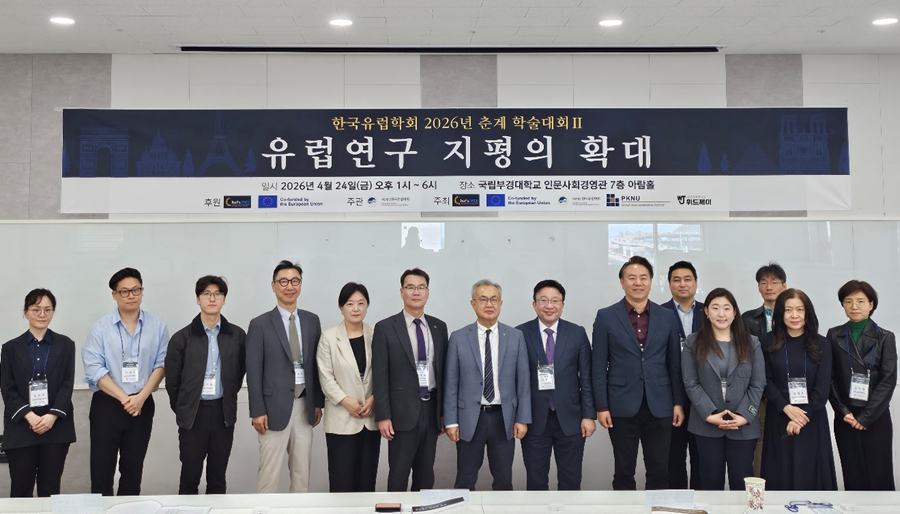
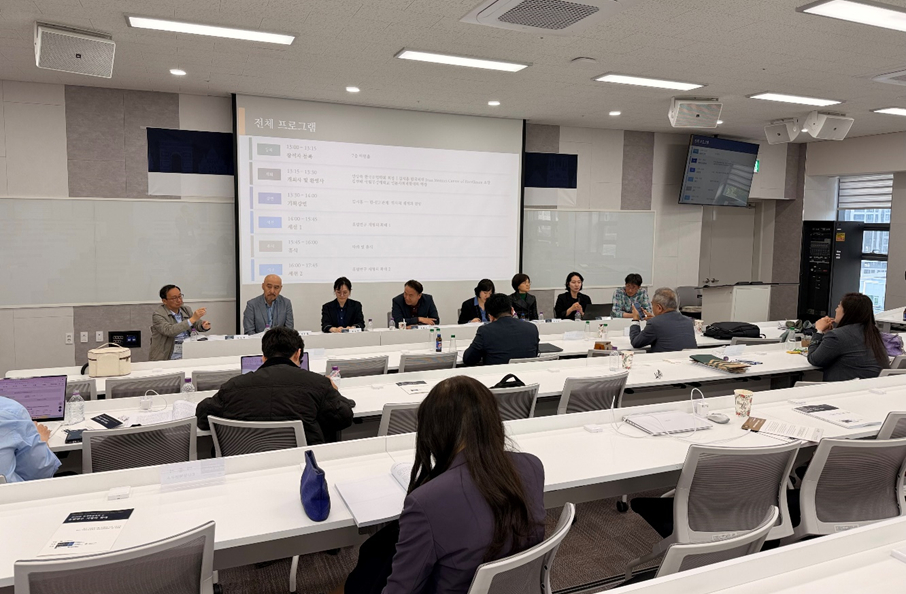
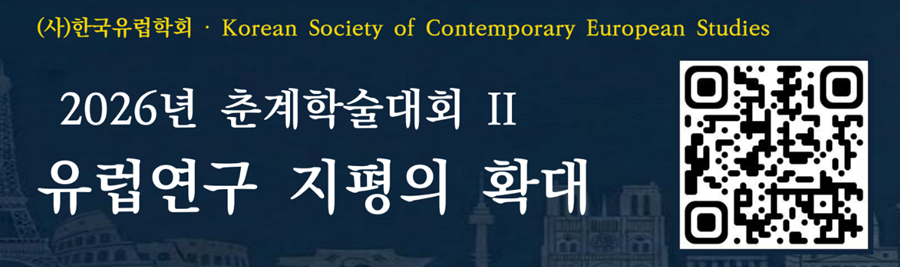
The Jean Monnet EU Centre at Hankuk University of Foreign Studies (HUFS) co-hosted the 2026 Spring Academic Conference II: Expanding the Horizons of European Studies on April 24, 2026, at 1:00 p.m. in Aram Hall, located on the 7th floor of the Humanities, Social Sciences and Business Administration Building at Pukyong National University. Organized by the Korean Association of Contemporary European Studies (KACES), the conference was held with the support of the HUFS Jean Monnet EU Centre and jointly hosted by the HUFS Jean Monnet EU Centre, KACES, the Institute for Global Multi-Governance at Pukyong National University, and the Public Policy Research Institute WithJ.
The conference was organized to explore new directions for European Studies amid a period of complex transformations characterized by intensifying geopolitical conflicts, energy security challenges, climate change responses, and the restructuring of global supply chains. Through an integrated approach encompassing politics, economics, society, culture, and security, the conference aimed to broaden the academic horizons of European Studies and deepen analysis of issues such as global governance, normative power, and industrial and technological competition.
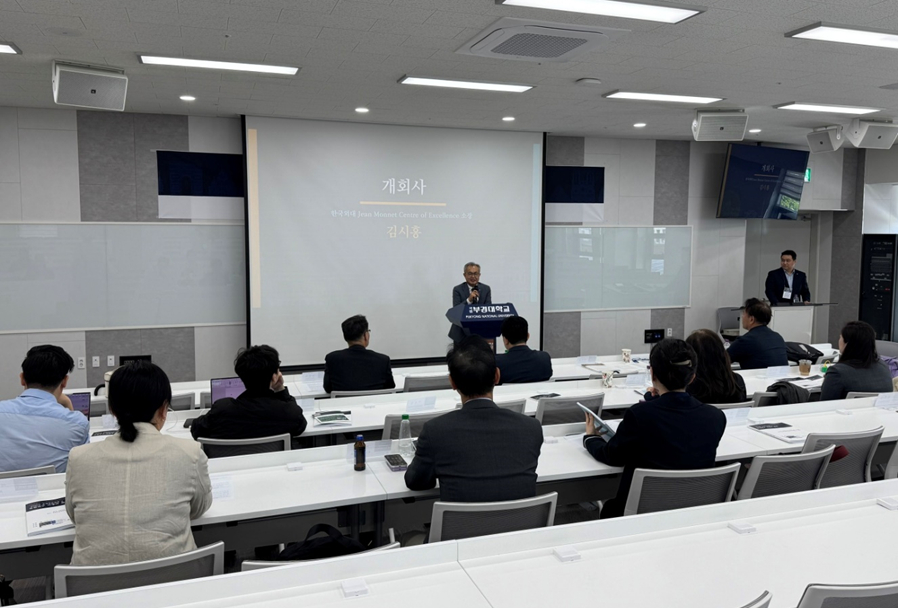
The opening ceremony began with welcoming remarks by Sangwook Ahn, President of the Korean Association of Contemporary European Studies, followed by addresses from Sihong Kim, former Director of the HUFS Jean Monnet EU Centre and Advisor to KACES, and Hyuntae Kim, Dean of the College of Humanities and Social Sciences at Pukyong National University.
A key highlight of the conference was the special lecture delivered by former Director Sihong Kim under the title “Korea–EU Relations: Historical Trajectory and Future Prospects.” In his presentation, Professor Kim revisited the formation and development of Korea–EU relations within their historical context and emphasized that the strategic importance of Korea–EU cooperation has become even more pronounced amid recent changes in the international order. He also outlined concrete opportunities for cooperation in major policy areas, including energy transition, supply chain restructuring, and security cooperation, providing valuable insights into the future direction of Korea–EU relations. The lecture attracted considerable attention from participants by presenting the central themes and key questions that guided the overall conference.
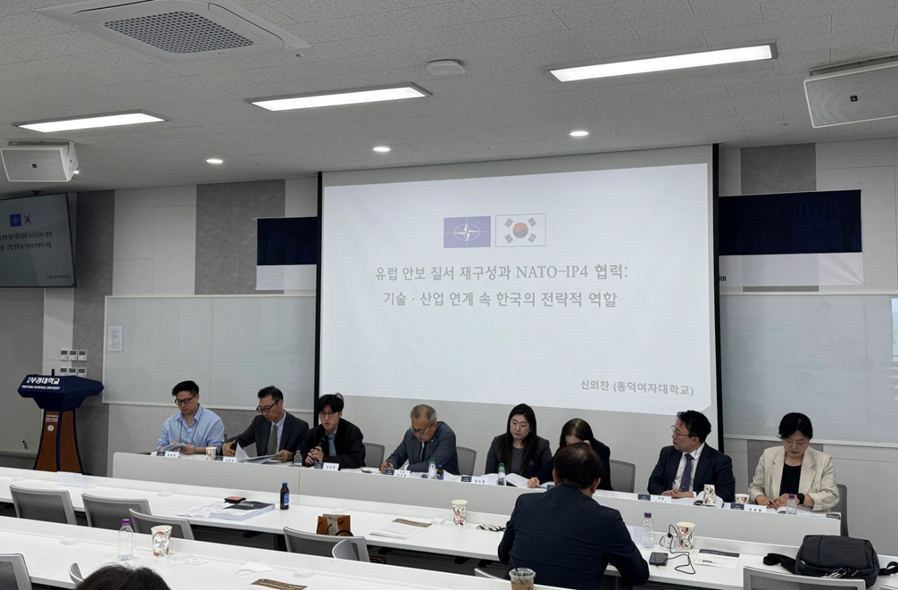
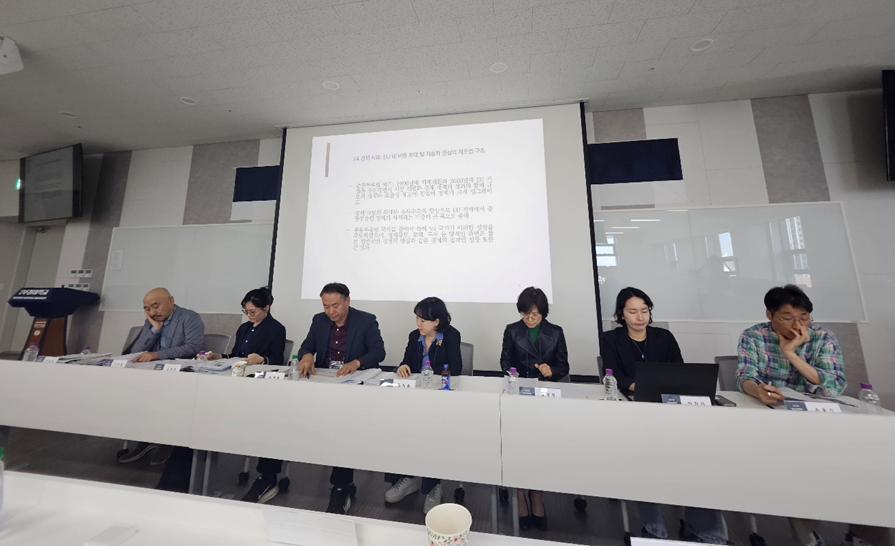
The subsequent sessions explored the expanding possibilities of European Studies through a diverse range of topics. Session 1 addressed issues including the democratic deficit of European integration, NATO–IP4 cooperation and Korea’s strategic role, regional balanced development strategies, and the achievements and limitations of the Lisbon Treaty. Session 2 featured presentations on the performance of Korean companies operating in Central and Eastern Europe, the politics of emotions, North Korea’s engagement with Western Europe, the convergence of cultural heritage and the luxury industry, and energy democracy. Hayan Lee, Associate Director of the HUFS Jean Monnet EU Centre, participated as a discussant and contributed to the in-depth exchange of ideas.
The conference was particularly meaningful as an interdisciplinary forum bringing together scholars, policymakers, and industry experts. It highlighted both the theoretical expansion of European Studies and its practical policy relevance. Moreover, it provided an opportunity to reassess the analytical contributions that European Studies can offer in a changing global governance environment and to explore new directions for cooperation between Korea and Europe.
The HUFS Jean Monnet EU Centre will continue to promote academic exchange and collaboration aimed at advancing and expanding European Studies in the years ahead.